




Categories:
- Product Description
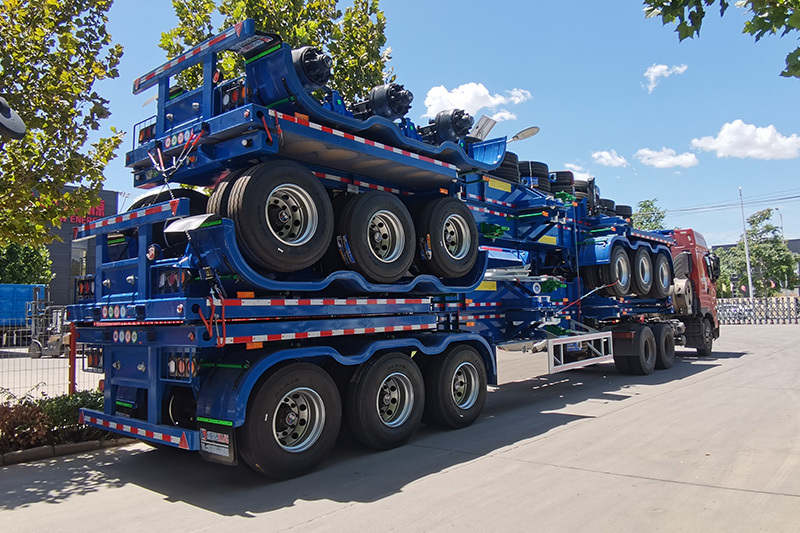
Low flatbed semi-trailer
-
- Commodity name: Low flatbed semi-trailer
**Low Flatbed Semi-Trailer: A Comprehensive Overview**
In the world of transportation and logistics, the low flatbed semi-trailer has carved a niche for itself as an essential tool for hauling heavy and oversized loads. Its unique design and structural features make it particularly suitable for transporting a wide variety of goods, including construction equipment, machinery, and large vehicles. This article delves into the characteristics, advantages, applications, and considerations associated with low flatbed semi-trailers.
**Understanding the Design**
A low flatbed semi-trailer is characterized by its lower deck height compared to traditional flatbed trailers. This design allows for a lower center of gravity, making it safer and more stable when transporting heavy loads. The deck is typically flat and open, providing ample space for loading and unloading goods. The trailer's construction usually includes robust materials such as steel, ensuring durability and strength to handle substantial weight.
The low profile of these trailers is achieved through various design elements, including drop-frame construction. This design not only lowers the height of the deck but also enhances the trailer's ability to accommodate taller cargo. Additionally, many low flatbed semi-trailers come equipped with ramps, allowing for easier loading and unloading of equipment and machinery.
**Advantages of Low Flatbed Semi-Trailers**
One of the primary advantages of low flatbed semi-trailers is their versatility. They can transport a wide range of items, from construction machinery and agricultural equipment to oversized goods that do not fit within the confines of standard trailers. This versatility makes them an invaluable asset in various industries, including construction, agriculture, and manufacturing.
Another significant benefit is the enhanced safety they provide. The lower center of gravity reduces the risk of tipping, particularly when navigating turns or uneven terrain. This stability is crucial when transporting heavy loads, as it minimizes the chances of accidents and improves overall road safety.
Low flatbed semi-trailers are also designed for efficiency. The open deck allows for quick and easy loading and unloading, reducing downtime during transportation. This efficiency can translate into cost savings for businesses, as it allows for faster delivery times and reduced labor costs associated with loading and unloading.
**Applications in Various Industries**
The applications of low flatbed semi-trailers are vast and varied. In the construction industry, they are commonly used to transport heavy machinery such as excavators, bulldozers, and cranes. The ability to load and unload equipment quickly and safely makes them a preferred choice for construction companies that need to move equipment between job sites.
In the agricultural sector, low flatbed semi-trailers are used to transport large farming equipment, such as tractors and combines. These trailers can accommodate the height and width of agricultural machinery, ensuring that farmers can efficiently transport their equipment to and from fields.
Additionally, low flatbed semi-trailers are often utilized in the manufacturing sector to move large components and machinery. Whether it's transporting steel beams for construction or large turbines for energy production, these trailers provide the necessary support and stability to handle substantial loads.
**Considerations When Choosing a Low Flatbed Semi-Trailer**
When selecting a low flatbed semi-trailer, several factors should be considered to ensure that it meets the specific needs of the business. First and foremost, it is essential to evaluate the weight capacity of the trailer. Different models can handle varying weights, so understanding the types of loads that will be transported is crucial.
Another consideration is the length and width of the trailer. Depending on the size of the cargo, a longer or wider trailer may be necessary. Additionally, the design of the trailer should be examined to ensure it has the appropriate features for loading and unloading, such as ramps or side rails.
It is also important to consider the compatibility of the trailer with the towing vehicle. Ensuring that the truck or tractor used for towing can handle the weight and size of the trailer is vital for safe and efficient transportation.
Lastly, maintenance and durability are key factors. Investing in a high-quality low flatbed semi-trailer can save costs in the long run, as it will require less frequent repairs and replacements. Regular maintenance checks are also essential to ensure that the trailer remains in good condition and safe for use.
**Conclusion**
The low flatbed semi-trailer is an indispensable tool in the transportation and logistics industry. Its unique design, safety features, and versatility make it ideal for transporting heavy and oversized loads across various sectors. By understanding the advantages, applications, and considerations associated with these trailers, businesses can make informed decisions that enhance their operational efficiency and safety. As industries continue to evolve and demand for efficient transportation solutions grows, low flatbed semi-trailers will undoub tedly remain a crucial component of logistics and transportation strategies.

Get A Free Product Quote
Fill in your phone and email information, we will contact you within one working day and solve your problem as soon as possible.
Shenghang Special Purpose Vehicle
Toll Free Hotline:400-059-0596
Tel:0086-311-85426885
Whatsapp:8618830151313(Sophia)