



Categories:
- Product Description
Flatbed Semi - Trailer
-
- Commodity name: Flatbed Semi - Trailer
Flatbed Semi-Trailer
Flatbed semi-trailers are an essential component of the transportation industry, serving as versatile and reliable vehicles for hauling a wide range of goods. Their unique design and functionality make them suitable for various applications, from construction materials to oversized machinery. In this article, we will explore the characteristics, advantages, and various uses of flatbed semi-trailers, as well as considerations for their operation and maintenance.
**Understanding Flatbed Semi-Trailers**
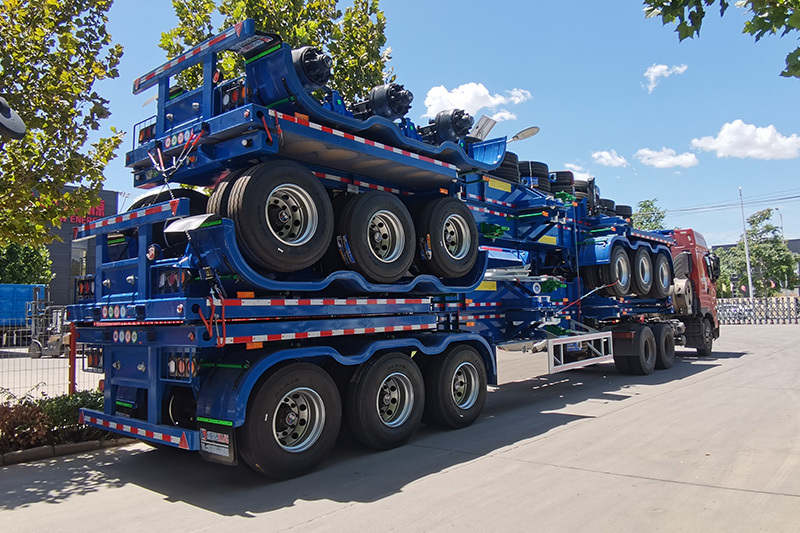
A flatbed semi-trailer is a type of trailer that has a flat, open platform without sides or a roof. This design allows for easy loading and unloading of cargo from all angles. Flatbed semi-trailers are typically coupled with a tractor unit, which provides the necessary power to transport heavy loads across long distances. The absence of sides and a roof makes them ideal for transporting large, heavy, or oddly shaped items that cannot fit into standard enclosed trailers.
Flatbed trailers come in various sizes and configurations, with different weight capacities to accommodate diverse cargo needs. They are commonly constructed from durable materials like steel or aluminum, ensuring they can withstand the rigors of heavy hauling. The standard length for flatbed trailers is usually around 48 to 53 feet, while their width is generally about 8.5 feet, allowing for a substantial amount of cargo space.
**Advantages of Flatbed Semi-Trailers**
One of the primary advantages of flatbed semi-trailers is their versatility. They can transport a wide array of goods, including construction materials, machinery, vehicles, and bulk items. The open design allows for easy loading and unloading, which is particularly beneficial for oversized or heavy cargo that cannot be maneuvered into enclosed spaces. Forklifts and cranes can easily access flatbed trailers, streamlining the loading process.
Another significant advantage is the ability to transport tall or oversized loads. Many flatbed trailers are equipped with specialized features such as removable stakes, adjustable tie-down points, and various types of securement systems, allowing operators to safely transport cargo that exceeds standard height or width restrictions. This flexibility is crucial in industries such as construction and agriculture, where oversized materials are common.
Flatbed semi-trailers also offer better visibility during transportation. Since there are no sides or a roof obstructing the view, drivers can see their cargo clearly, which can enhance safety and reduce the risk of accidents. Additionally, the open design allows for better airflow, which can be advantageous when transporting certain types of goods that require ventilation.
**Common Uses of Flatbed Semi-Trailers**
Flatbed semi-trailers are used across various industries, each with specific requirements for transportation. In the construction industry, they are frequently used to transport heavy equipment such as bulldozers, excavators, and scaffolding. The ability to load and unload from multiple angles makes flatbed trailers ideal for construction sites where space may be limited.
In the manufacturing sector, flatbed trailers are often employed to transport raw materials, such as steel beams, lumber, and large machinery. Their versatility allows manufacturers to efficiently move goods between suppliers, production facilities, and distribution centers.
The agriculture industry also relies on flatbed semi-trailers for transporting crops, livestock, and farming equipment. The open design allows for easy access to the cargo, whether it is bales of hay, pallets of produce, or machinery used in the field.
Moreover, flatbed semi-trailers are commonly used in the automotive industry for transporting vehicles. Car dealerships and manufacturers often use flatbed trailers to move cars and trucks to and from various locations, taking advantage of the trailers’ ability to carry multiple vehicles at once.
**Considerations for Operation and Maintenance**
While flatbed semi-trailers offer numerous benefits, there are also considerations to keep in mind regarding their operation and maintenance. Proper loading techniques are crucial to ensure the safety of the cargo and the driver. It is essential to distribute the weight evenly across the trailer to maintain stability during transportation. Additionally, securing the load with appropriate tie-downs and straps is vital to prevent shifting or falling during transit.
Regular maintenance is also critical to ensure the longevity and safety of flatbed semi-trailers. This includes routine inspections of the trailer’s structural integrity, brakes, tires, and lighting systems. Keeping the trailer clean and free from debris will help maintain its condition and prevent damage.
Furthermore, drivers should be trained in handling flatbed trailers, as their operation may differ from enclosed trailers. Understanding how to navigate loading and unloading processes, as well as being aware of specific regulations related to oversized loads, is essential for safe and efficient transportation.
**Conclusion**
Flatbed semi-trailers play a vital role in the transportation industry, providing a versatile and efficient solution for moving a wide range of goods. Their open design, coupled with the ability to transport oversized and heavy cargo, makes them indispensable in various sectors, including construction, manufacturing, and agriculture. However, proper operation and maintenance are crucial to ensure safety and efficiency. As the demand for transportation continues to grow, flatbed semi-trailers will remain a key player in meeting the logistical needs of businesses across the globe.

Get A Free Product Quote
Fill in your phone and email information, we will contact you within one working day and solve your problem as soon as possible.
Shenghang Special Purpose Vehicle
Toll Free Hotline:400-059-0596
Tel:0086-311-85426885
Whatsapp:8618830151313(Sophia)