



Categories:
- Product Description
Flatbed semi-trailer
-
- Commodity name: Flatbed semi-trailer
**Flatbed Semi-Trailer**
In the modern transportation industry, flatbed semi trailers have become an important tool for logistics and cargo transportation due to their unique design and flexible functions. The main feature of a flatbed semi-trailer is its flat cargo platform, which is suitable for transporting various types of goods, including large equipment, building materials, and other irregularly shaped items. This article will explore the structure, advantages, application areas, and future development trends of flatbed semi trailers.
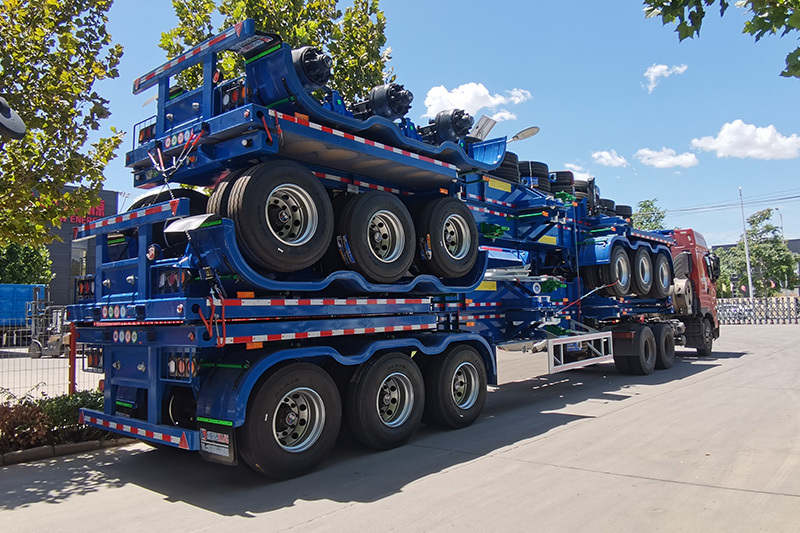
Firstly, the structural design of the flatbed semi-trailer is crucial. A flatbed semi-trailer usually consists of two parts: a tractor and a semi-trailer. The semi-trailer itself does not have front wheels and relies on the towing of the tractor to move. The chassis of a flatbed semi-trailer is usually made of high-strength steel to withstand the pressure of heavy cargo. The platform is designed with no side walls and no roof, which makes loading and unloading of goods more convenient. To ensure safety, the flatbed semi-trailer is also equipped with various fixing devices, such as ropes, chains, and support legs, to ensure that the goods will not move or overturn during transportation.
Secondly, the advantages of flatbed semi trailers make them occupy an important position in the transportation industry. Firstly, due to its open design, flatbed semi trailers can transport goods of various shapes and sizes without restrictions. This flexibility makes it widely used in multiple industries such as construction, manufacturing, and agriculture. Secondly, the loading and unloading efficiency of flatbed semi trailers is relatively high. Due to the lack of side walls and canopy, workers can easily load and unload from any direction, which is particularly important in time sensitive situations. In addition, the load-bearing capacity of flatbed semi trailers is relatively high, with many models capable of carrying up to 48000 pounds (approximately 21800 kilograms) of cargo.
In terms of application fields, the use of flatbed semi trailers is very extensive. Firstly, in the construction industry, flatbed semi trailers are often used to transport steel, concrete, and other building materials. These materials are usually large in volume and heavy in weight, and the design of flatbed semi trailers can meet these transportation needs. Secondly, in the manufacturing industry, flatbed semi trailers can transport large machinery and equipment, such as excavators and rollers. These devices are usually not suitable for enclosed trucks, so flatbed semi trailers have become an ideal choice. In addition, in the agricultural field, flatbed semi trailers are also used to transport agricultural machinery and bulk agricultural products such as grains and vegetables.
Despite the numerous advantages of flatbed semi trailers, they also face some challenges during use. Firstly, the open design makes the goods susceptible to weather and environmental influences during transportation. For example, rainwater, sandstorms, etc. may cause damage to goods, so additional protective measures must be taken when transporting easily damaged goods. Secondly, special attention should be paid to the cargo fixation of flatbed semi trailers. If not properly secured, the goods may slip or overturn during transportation, posing a safety hazard. Therefore, drivers and cargo handling personnel need to receive professional training to ensure compliance with safety regulations during loading, unloading, and transportation.
Looking ahead, the design and application of flatbed semi trailers will continue to evolve. With the advancement of technology, the emergence of intelligent transportation systems may change the operation mode of flatbed semi trailers. For example, by using sensors and GPS technology, the status and location of goods can be monitored in real time, thereby improving the safety and efficiency of transportation. In addition, the increasing awareness of environmental protection has also prompted the transportation industry to seek more sustainable solutions. In the future, there may be more flatbed semi trailers driven by lightweight materials and new energy sources to reduce carbon emissions and energy consumption.
In short, flatbed semi trailers play an indispensable role in modern logistics and transportation industries. It meets various transportation needs with its unique design and diverse applications. Despite facing some challenges, with the advancement of technology and the continuous development of the industry, the future of flatbed semi trailers will be even brighter. Whether in the fields of construction, manufacturing, or agriculture, flatbed semi trailers will continue to play an important role in promoting the sustainable development of the transportation industry.

Get A Free Product Quote
Fill in your phone and email information, we will contact you within one working day and solve your problem as soon as possible.
Shenghang Special Purpose Vehicle
Toll Free Hotline:400-059-0596
Tel:0086-311-85426885
Whatsapp:8618830151313(Sophia)