

Categories:
- Product Description
Skeleton semi-trailer
-
- Commodity name: Skeleton semi-trailer
Title: Skeleton semi transporter
Introduction
In the modern logistics industry, the efficiency and safety of goods transportation are crucial. With the continuous growth of global trade, various modes of transportation have emerged. Among them, Skeleton semi-trailer plays an important role in container transportation with its unique design and function. This article will explore the definition, structural characteristics, application scenarios, and future development trends of skeleton semi-trailer.
definition
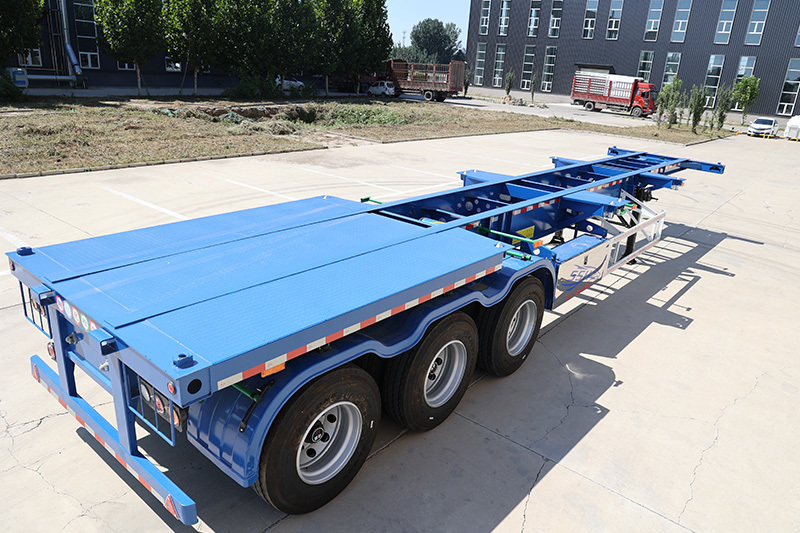
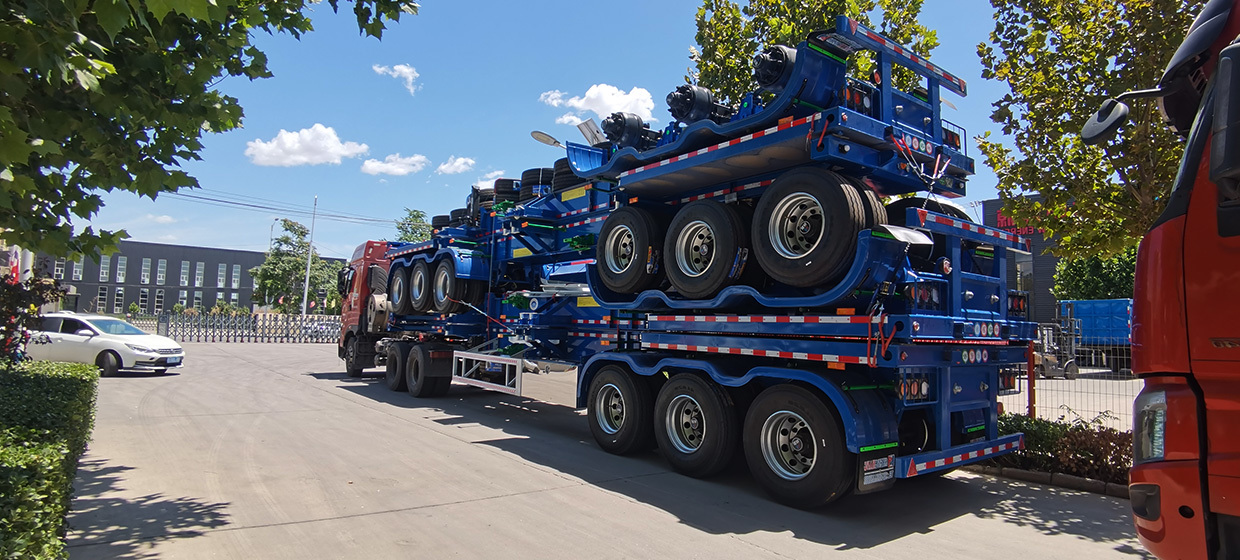
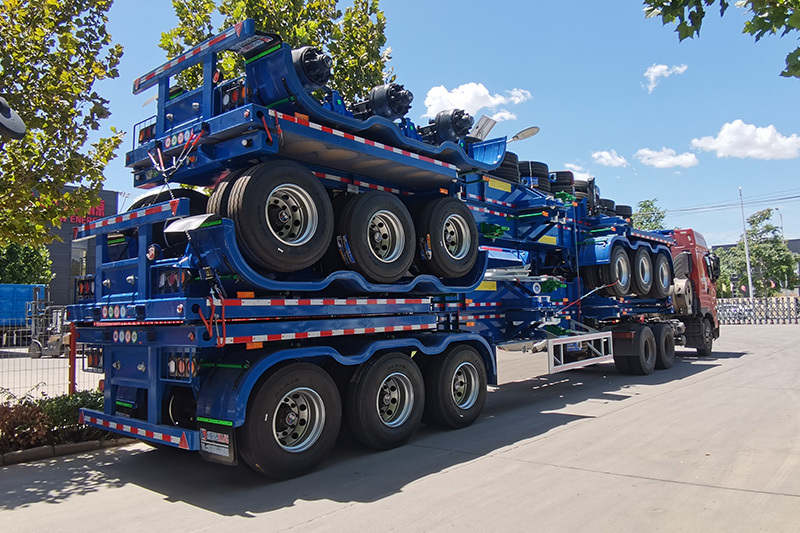
Skeleton semi-trailer is a type of semi-trailer designed specifically for transporting containers. Its main structure consists of a series of sturdy steel frames that can support the weight of a standard container. Compared with traditional freight transport vehicles, the design of skeleton semi-trailer is simpler, lighter in weight, and easier to improve transportation efficiency. Its main function is to carry containers and connect them with towing vehicles through trailers, thereby achieving efficient transportation of goods.
structural characteristics
The structural design of the skeleton semi-trailer is unique, mainly composed of the following parts:
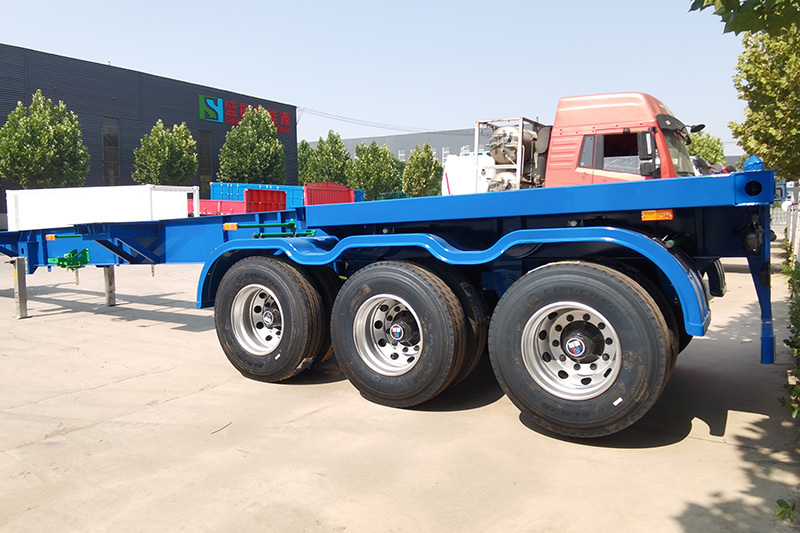
1. Skeleton: The skeleton is the core part of a semi-trailer, usually made of high-strength steel to ensure that it can withstand heavy loads during transportation. The design of the skeleton takes into account the standard dimensions of the container, enabling it to securely fix the container.
2. Tires and axles: The skeleton semi-trailer is equipped with multiple tires and axles to ensure its stability and safety during driving. The selection of tires usually takes into account their load-bearing capacity and wear resistance to adapt to various road conditions.
3. Coupling device: The semi-trailer is connected to the tractor through a coupling device, which is usually made of high-strength and durable materials to ensure that there will be no looseness or detachment during transportation.
4. Anti slip design: In order to improve the stability of the container during transportation, skeleton semi trailers usually adopt anti slip design to ensure that the container will not move during driving.
Application scenarios
The main application scenarios of skeleton semi-trailer are concentrated in the field of container transportation. With the development of international trade, the combination of sea and land transportation has become increasingly common. The skeleton semi-trailer plays an important role in this process, mainly reflected in the following aspects:
1. Port transportation: In ports, containers need to be transferred between ships and land. Skeleton semi-trailer can quickly and efficiently transport containers from the port to the destination, shortening the turnover time of goods.
2. Long distance transportation: For containers that require long-distance transportation, the skeleton semi-trailer, with its lightweight design, can improve fuel efficiency and reduce transportation costs. Meanwhile, its sturdy structure ensures the safety of the container during long-distance transportation.
3. Logistics Center: In logistics centers, skeleton semi trailers are widely used for container loading and unloading operations. Due to its simple design, operators can quickly load containers onto the skeleton semi-trailer, improving work efficiency.
Future Development Trends
With the advancement of technology and the continuous development of the logistics industry, skeleton semi trailers are also moving towards higher efficiency and intelligence. The future development trends are mainly reflected in the following aspects:
1. Lightweight design: In order to further improve transportation efficiency, future skeleton semi trailers will pay more attention to lightweight design. The use of new materials, such as aluminum alloy or composite materials, can effectively reduce self weight and improve load-bearing capacity.
2. Intelligent technology: With the development of the Internet of Things and big data technology, skeleton semi trailers will gradually achieve intelligence. By installing sensors and GPS positioning systems, transportation companies can monitor the status of goods in real time, improving transportation safety and efficiency.
3. Environmental design: Future skeleton semi trailers will pay more attention to environmental protection, adopt low emission power systems, and reduce carbon emissions during transportation. In addition, designers will also consider using renewable materials to reduce the environmental impact during the production process.
Conclusion
Skeleton semi-trailer, as an important tool for modern logistics transportation, is widely used in the field of container transportation due to its unique design and efficient functions. With the development of technology and changes in industry demand, skeleton semi trailers will continue to make progress in lightweight, intelligent, and environmentally friendly design. In the future, skeleton semi trailers will continue to play an important role in global logistics transportation, providing strong support for promoting s mooth international trade.

Get A Free Product Quote
Fill in your phone and email information, we will contact you within one working day and solve your problem as soon as possible.
Shenghang Special Purpose Vehicle
Toll Free Hotline:400-059-0596
Tel:0086-311-85426885
Whatsapp:8618830151313(Sophia)