



Categories:
Label:
- Product Description
skeleton semi trailer
-
- Commodity name: skeleton semi trailer
**Skeleton Semi Trailer**
The skeleton semi trailer is a specialized type of trailer designed primarily for transporting containers. Its unique design allows for efficient loading and unloading, making it a preferred choice for logistics and transportation companies. In this article, we will explore the features, benefits, applications, and maintenance of skeleton semi trailers.
**Understanding the Skeleton Semi Trailer**
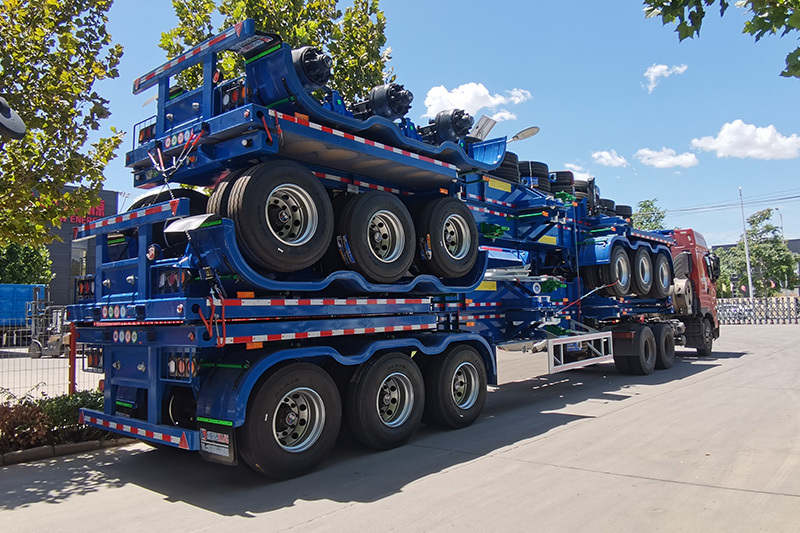
Skeleton semi trailers are characterized by their open frame structure, which resembles a skeleton. Unlike traditional enclosed trailers, skeleton trailers do not have side walls or a roof, allowing for easy access to the cargo. The primary purpose of a skeleton trailer is to transport shipping containers, which are typically standardized in size. This design provides flexibility in handling various container types, including 20-foot, 40-foot, and 45-foot containers.
The main components of a skeleton semi trailer include the chassis, twist locks, and axles. The chassis is the backbone of the trailer, providing the necessary support and stability. Twist locks are crucial for securing the containers in place during transit. The axles are responsible for carrying the weight of the trailer and its load, ensuring s mooth movement on the road.
**Benefits of Skeleton Semi Trailers**
One of the primary benefits of skeleton semi trailers is their lightweight design. Compared to traditional trailers, skeleton trailers are significantly lighter, which allows for higher payload capacities. This is particularly advantageous in the logistics industry, where maximizing cargo weight can lead to increased profits.
Another benefit is the ease of loading and unloading. The open structure of skeleton trailers allows for quick and efficient access to the cargo. This can significantly reduce turnaround times at loading docks, improving overall operational efficiency. Additionally, the design minimizes the risk of damage to the cargo during loading and unloading processes.
Skeleton semi trailers also offer versatility. They can be used for transporting various types of containers, making them suitable for different industries, including shipping, construction, and retail. Their adaptability allows logistics companies to meet diverse customer needs without investing in multiple types of trailers.
**Applications of Skeleton Semi Trailers**
Skeleton semi trailers are widely used in the shipping and logistics industry. They are commonly employed to transport containers between ports, warehouses, and distribution centers. Their design makes them ideal for intermodal transportation, where containers are moved by different modes of transport, such as ships, trains, and trucks.
In addition to shipping, skeleton trailers can also be used in construction. They can transport equipment and materials to job sites, providing a reliable solution for construction companies. The ability to carry multiple containers or oversized loads makes them valuable assets in various sectors.
Furthermore, skeleton semi trailers are often used for temporary storage solutions. When containers are delivered to a location but cannot be unloaded immediately, the skeleton trailer can serve as a temporary storage unit. This flexibility is particularly useful in urban areas where space is limited.
**Maintenance of Skeleton Semi Trailers**
Proper maintenance is crucial for ensuring the longevity and efficiency of skeleton semi trailers. Regular inspections should be conducted to check for any signs of wear and tear, particularly on the chassis, axles, and twist locks. Any damaged components should be repaired or replaced promptly to avoid potential safety hazards.
Tire maintenance is also essential. Tires should be inspected regularly for proper inflation and tread wear. Keeping tires in good condition not only enhances safety but also improves fuel efficiency. Regular wheel alignment checks can help prevent uneven tire wear and ensure s moother rides.
Additionally, the trailer's braking system must be maintained to ensure optimal performance. Brake pads and discs should be checked for wear, and any necessary adjustments should be made to maintain stopping power. Keeping the braking system in top condition is vital for the safety of both the driver and other road users.
**Conclusion**
In conclusion, skeleton semi trailers play a significant role in the transportation and logistics industry. Their lightweight design, ease of loading and unloading, and versatility make them an excellent choice for transporting containers. With applications spanning shipping, construction, and temporary storage, skeleton trailers are valuable assets for various sectors. However, proper maintenance is essential to ensure their longevity and efficiency. As the logistics industry continues to evolve, skeleton semi trailers will remain a crucial component in meeting the demands of modern transportation.

Get A Free Product Quote
Fill in your phone and email information, we will contact you within one working day and solve your problem as soon as possible.
Shenghang Special Purpose Vehicle
Toll Free Hotline:400-059-0596
Tel:0086-311-85426885
Whatsapp:8618830151313(Sophia)