



Categories:
- Product Description
Flatbed semi trailer
-
- Commodity name: Flatbed semi trailer
**Flatbed Semi Trailer**
Flatbed semi trailers are an essential component of the logistics and transportation industry. They are widely recognized for their versatility and capacity to carry various types of cargo. This article will delve into the features, benefits, and applications of flatbed semi trailers, as well as the considerations for their use in modern transportation.
**Understanding Flatbed Semi Trailers**
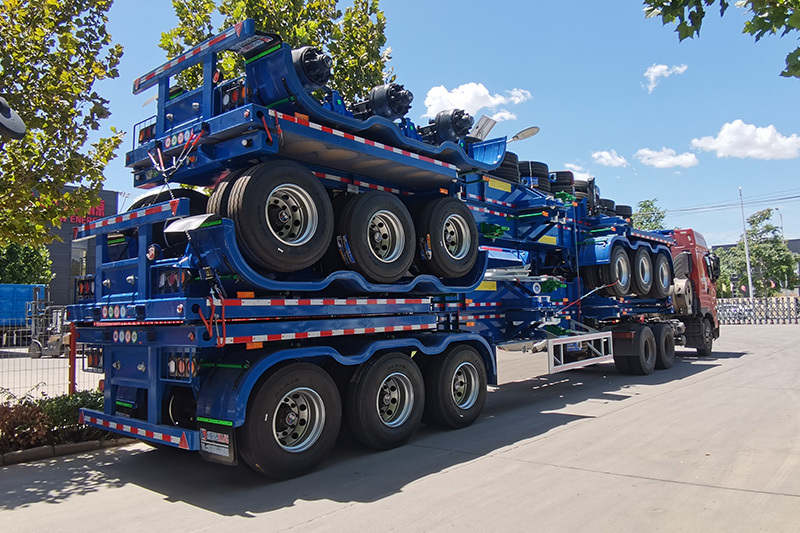
A flatbed semi trailer is a type of trailer that has a flat, level platform without sides or a roof. This design allows for easy loading and unloading of goods, making it particularly useful for transporting oversized or irregularly shaped items. Flatbed trailers come in various sizes and configurations, typically ranging from 48 to 53 feet in length. They are designed to be towed by a semi-truck, which provides the necessary power and maneuverability for long-distance transportation.
The construction of flatbed trailers often includes a sturdy steel frame and a wooden or metal deck, which can withstand heavy loads. Some flatbed trailers are equipped with features such as stake pockets, winches, and tarps to secure cargo and protect it from the elements. This flexibility in design allows for a wide range of cargo types, including construction materials, machinery, and even vehicles.
**Advantages of Flatbed Semi Trailers**
One of the primary advantages of flatbed semi trailers is their versatility. They can accommodate a variety of cargo types that other trailers may not be able to handle. For example, flatbeds are ideal for transporting large equipment like cranes, bulldozers, and other heavy machinery. Additionally, they can carry loads that exceed the height restrictions of enclosed trailers, making them a preferred choice for specific industries.
Another significant benefit of flatbed trailers is the ease of loading and unloading. With no sides or roof to contend with, cargo can be loaded from the sides, rear, or even from above using cranes or forklifts. This accessibility can significantly reduce loading times and improve efficiency in the shipping process. Furthermore, flatbeds can be loaded with cargo that requires specialized handling, such as large pipes or lumber, which can be challenging to transport using traditional enclosed trailers.
**Applications in Various Industries**
Flatbed semi trailers are utilized across multiple industries, each benefiting from their unique capabilities. In the construction industry, for instance, flatbeds are essential for transporting building materials like steel beams, concrete blocks, and heavy equipment. Their ability to handle oversized loads makes them invaluable on job sites where heavy machinery is needed.
The manufacturing sector also relies heavily on flatbed trailers for shipping large components and machinery. Factories often produce items that cannot be easily contained within standard trailers, making flatbeds a practical solution for transporting these goods to distribution centers or directly to customers.
In the agricultural sector, flatbed trailers are used to transport farm equipment, livestock, and bulk agricultural products. Their open design allows for easy access and loading, which is crucial during the busy harvest season when time is of the essence.
**Considerations for Using Flatbed Semi Trailers**
While flatbed semi trailers offer numerous advantages, there are also considerations that operators must keep in mind. One of the primary concerns is securing the cargo. Unlike enclosed trailers, flatbeds require additional measures to ensure that loads do not shift or fall during transportation. This may involve using straps, chains, or tarps, which require proper training and knowledge to implement effectively.
Weather conditions can also pose a challenge for flatbed trailers. Since the cargo is exposed to the elements, operators must take precautions to protect sensitive materials from rain, snow, or extreme temperatures. This may involve using tarps or other protective coverings, which can add time and labor to the loading process.
Another consideration is compliance with regulations. Different states and countries have varying laws regarding weight limits, load securement, and safety standards for transporting goods on flatbed trailers. Operators must stay informed about these regulations to avoid fines and ensure the safe transport of their cargo.
**Conclusion**
Flatbed semi trailers play a crucial role in the transportation industry, providing a versatile and efficient solution for moving a wide range of cargo. Their unique design allows for easy loading and unloading, making them ideal for transporting oversized and irregularly shaped items. While there are considerations to keep in mind regarding cargo security and weather protection, the advantages of flatbed trailers make them a valuable asset in various sectors, including construction, manufacturing, and agriculture.
As the logistics industry continues to evolve, the demand for flatbed semi trailers is likely to remain strong. Their ability to adapt to changing cargo needs and industry requirements will ensure that they remain a staple in transportation for years to come. Whether for local deliveries or long-haul shipping, flatbed semi trailers will continue to be an essential tool for moving goods efficiently and effectively.

Get A Free Product Quote
Fill in your phone and email information, we will contact you within one working day and solve your problem as soon as possible.
Shenghang Special Purpose Vehicle
Toll Free Hotline:400-059-0596
Tel:0086-311-85426885
Whatsapp:8618830151313(Sophia)