



Categories:
- Product Description
Skeletal semi trailer
-
- Commodity name: Skeletal semi trailer
**Skeletal Semi Trailer**
A skeletal semi trailer is a specialized type of trailer designed primarily for the transportation of containers. This innovative design has become an essential component in the logistics and transportation industry, particularly in the realm of intermodal freight transport. In this article, we will explore the structure, advantages, applications, and future trends of skeletal semi trailers.
**Understanding the Structure of Skeletal Semi Trailers**
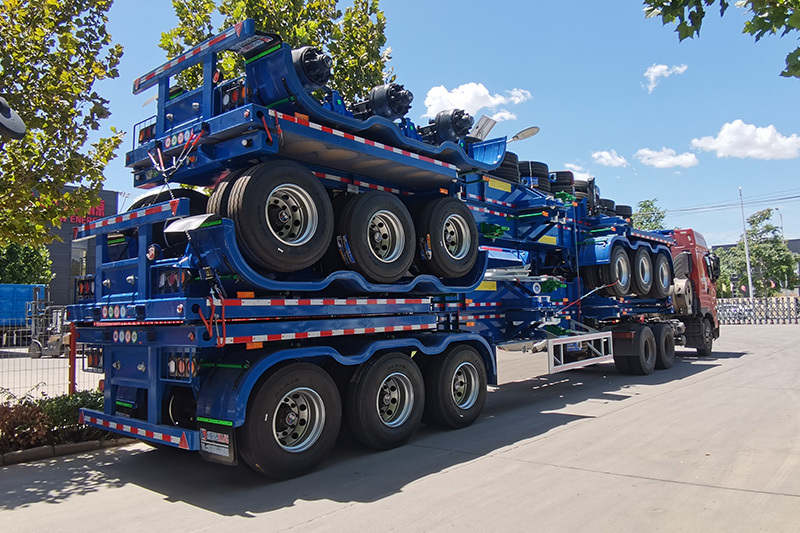
Skeletal semi trailers are characterized by their minimalist design. Unlike traditional trailers that may be fully enclosed or feature a solid floor, skeletal trailers have a skeletal frame that provides the necessary support for shipping containers. The frame typically consists of two main beams that run along the length of the trailer, along with cross members that create a rigid structure.
The skeletal design allows for the easy loading and unloading of containers. Most skeletal trailers are equipped with twist locks, which securely hold the containers in place during transit. This feature not only enhances safety but also ensures that containers can be quickly and efficiently loaded onto and off of the trailer.
Furthermore, skeletal semi trailers come in various lengths and configurations, accommodating different container sizes, including standard 20-foot and 40-foot containers. The versatility in design makes them suitable for a wide range of transportation needs.
**Advantages of Skeletal Semi Trailers**
One of the primary advantages of skeletal semi trailers is their lightweight construction. The reduced weight allows for a higher payload capacity, enabling carriers to transport more goods without exceeding weight limits. This efficiency can lead to significant cost savings for logistics companies, as they can maximize the use of their vehicles.
Additionally, the skeletal design enhances fuel efficiency. A lighter trailer requires less power to tow, which can result in lower fuel consumption. This is particularly important in an industry where fuel costs can significantly impact overall profitability.
Skeletal semi trailers also offer flexibility in operations. They can be easily coupled with various types of trucks, making them adaptable to different transport scenarios. Their design allows for quick transitions between road, rail, and sea transport, facilitating seamless intermodal shipping.
**Applications of Skeletal Semi Trailers**
Skeletal semi trailers are predominantly used in the transportation of shipping containers. They play a crucial role in the supply chain, connecting ports, rail terminals, and distribution centers. The ability to transport containers efficiently is vital in today’s globalized economy, where goods are often sourced from multiple countries.
In addition to container transport, skeletal semi trailers are also used for transporting oversized cargo that may not fit in standard trailers. Their customizable configurations can accommodate various cargo types, making them valuable assets for logistics companies.
Moreover, skeletal semi trailers are frequently utilized in urban areas where space is limited. Their compact design allows them to navigate narrow streets and tight corners, making them ideal for city deliveries. This adaptability is crucial as e-commerce continues to grow, leading to an increase in urban deliveries.
**Future Trends in Skeletal Semi Trailers**
As the transportation industry evolves, skeletal semi trailers are likely to undergo several advancements. One significant trend is the integration of technology. The use of telematics and GPS tracking systems is becoming increasingly common, allowing logistics companies to monitor the location and condition of their cargo in real-time. This data can enhance operational efficiency and improve customer service by providing accurate delivery estimates.
Another trend is the focus on sustainability. As environmental concerns rise, the logistics industry is exploring ways to reduce its carbon footprint. Skeletal semi trailers, with their lightweight construction, are already more fuel-efficient than traditional trailers. However, future designs may incorporate even more eco-friendly materials and technologies, such as electric or hybrid power systems.
Moreover, the rise of automation in the transportation sector may also influence the design and functionality of skeletal semi trailers. Automated loading and unloading systems could streamline operations, reducing labor costs and increasing efficiency.
**Conclusion**
Skeletal semi trailers are an integral part of the modern transportation landscape. Their unique design offers numerous advantages, including lightweight construction, fuel efficiency, and operational flexibility. As the demand for efficient container transport continues to grow, skeletal semi trailers will play a crucial role in facilitating global trade.
Looking ahead, advancements in technology and a focus on sustainability will likely shape the future of skeletal semi trailers, ensuring they remain relevant in an ever-evolving industry. With their adaptability and efficiency, skeletal semi trailers are poised to meet the challenges of tomorrow's logistics and transportation needs.

Get A Free Product Quote
Fill in your phone and email information, we will contact you within one working day and solve your problem as soon as possible.
Shenghang Special Purpose Vehicle
Toll Free Hotline:400-059-0596
Tel:0086-311-85426885
Whatsapp:8618830151313(Sophia)