



Categories:
- Product Description
Flatbed semi-trailer
-
- Commodity name: Flatbed semi-trailer
**Flatbed Semi-Trailer**
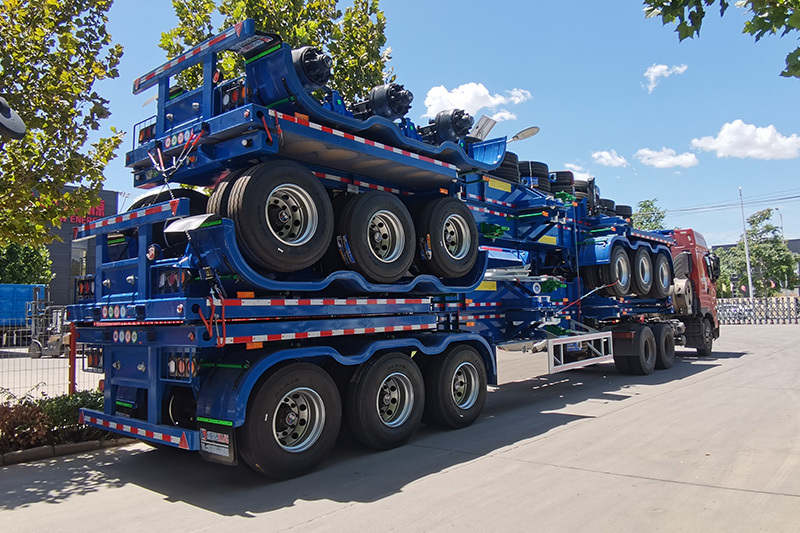
A flatbed semi-trailer is a versatile and essential piece of equipment in the transportation industry. Known for its open design and adaptability, this type of trailer is widely used for transporting various types of cargo, including oversized and heavy loads. In this article, we will explore the structure, advantages, applications, and safety considerations associated with flatbed semi-trailers.
**Structure and Design**
The flatbed semi-trailer is characterized by its flat, level platform without any sides or a roof. This design allows for easy loading and unloading from any angle, making it ideal for transporting large items. Typically constructed from high-strength steel or aluminum, flatbed trailers are built to withstand heavy loads while maintaining structural integrity.
Flatbed semi-trailers come in various lengths, widths, and weight capacities, catering to different transportation needs. Standard lengths range from 48 to 53 feet, while the width usually measures around 8.5 feet. The weight capacity can vary significantly, with some trailers able to carry up to 48,000 pounds or more, depending on their specifications and design.
**Advantages of Flatbed Semi-Trailers**
One of the primary advantages of flatbed semi-trailers is their versatility. They can accommodate a wide range of cargo types, including construction materials, machinery, and vehicles. The open design allows for the transportation of oversized loads that may not fit in enclosed trailers, making flatbeds a preferred choice for many industries.
Another significant benefit is the ease of loading and unloading. With no sides or roof to obstruct access, flatbed trailers allow for quick and efficient loading using cranes, forklifts, or other heavy equipment. This efficiency can significantly reduce downtime and increase productivity, especially in industries that require frequent loading and unloading.
Additionally, flatbed semi-trailers often have a lower center of gravity compared to enclosed trailers, providing better stability when transporting heavy loads. This design feature enhances safety during transit, reducing the risk of tipping or swaying, especially on uneven surfaces or during sharp turns.
**Applications of Flatbed Semi-Trailers**
Flatbed semi-trailers are used in various industries, including construction, agriculture, and logistics. In the construction sector, they are commonly employed to transport building materials such as lumber, steel beams, and concrete blocks. The ability to load and unload from multiple sides makes them particularly useful on job sites where access may be limited.
In agriculture, flatbed trailers are used to transport equipment, such as tractors and harvesters, as well as bulk materials like hay and grain. The open design allows farmers to quickly load and unload their equipment without the constraints of an enclosed trailer.
Logistics companies also rely on flatbed semi-trailers for transporting goods across long distances. Their versatility makes them suitable for carrying a wide variety of products, from industrial machinery to furniture. The ability to accommodate oversized loads means that flatbed trailers can meet the demands of diverse shipping needs.
**Safety Considerations**
While flatbed semi-trailers offer many advantages, safety is a crucial consideration when using them. Proper loading techniques are essential to ensure that the cargo is evenly distributed and securely fastened. Overloading a flatbed trailer can lead to instability and increase the risk of accidents on the road.
Using appropriate tie-downs and securing devices is vital to prevent cargo from shifting during transit. There are various methods for securing loads, including the use of straps, chains, and tarps. It is essential to follow industry standards and regulations to ensure that all loads are secured correctly.
Drivers and operators must also be aware of the specific challenges associated with transporting flatbed loads. For instance, visibility can be affected by the height and length of the cargo, necessitating caution when navigating through traffic or making turns. Additionally, drivers should be trained in handling oversized loads, as they may require special permits and route planning.
**Conclusion**
In summary, flatbed semi-trailers are an indispensable asset in the transportation industry, offering versatility, efficiency, and the ability to handle a wide range of cargo. Their open design allows for easy loading and unloading, making them suitable for various applications across multiple sectors. However, safety considerations must always be a priority to ensure the secure transport of goods. As the logistics and transportation industries continue to evolve, flatbed semi-trailers will remain a vital component, adapting to meet the changing demands of the market.

Get A Free Product Quote
Fill in your phone and email information, we will contact you within one working day and solve your problem as soon as possible.
Shenghang Special Purpose Vehicle
Toll Free Hotline:400-059-0596
Tel:0086-311-85426885
Whatsapp:8618830151313(Sophia)