



Categories:
Label:
- Product Description
Skeletal semi trailer
-
- Commodity name: Skeletal semi trailer
**Skeletal Semi Trailer**
A skeletal semi trailer is a specialized type of trailer designed primarily for transporting containers. This unique design allows for a lightweight yet robust solution for the logistics and transportation industry. In this article, we will explore the various aspects of skeletal semi trailers, including their construction, advantages, applications, and maintenance.
**Construction and Design**
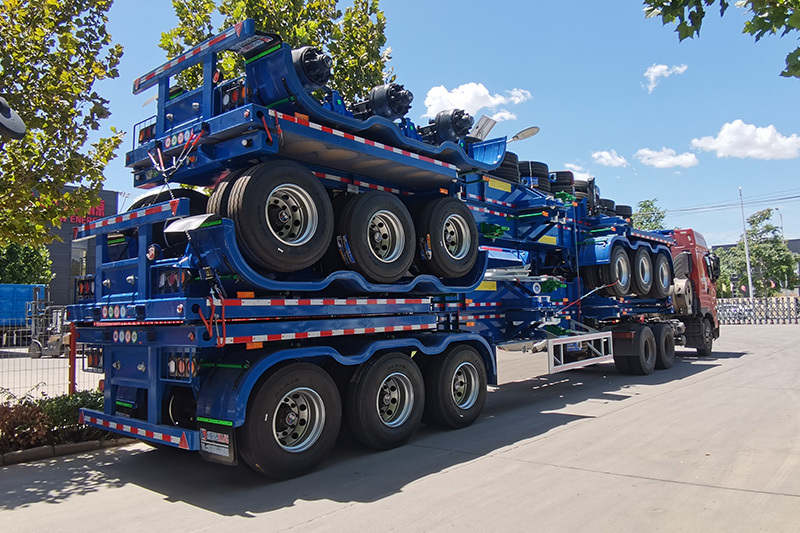
Skeletal semi trailers are characterized by their minimalist design, which typically consists of a strong frame with a limited number of structural components. The main elements include the chassis, axles, and a kingpin that connects the trailer to the tractor unit. Unlike traditional enclosed trailers, skeletal trailers lack side walls and a roof, making them ideal for carrying standard shipping containers.
The construction materials used for skeletal semi trailers are crucial to their performance. Most trailers are made from high-strength steel or aluminum, which provides durability while keeping the overall weight low. The design often includes features such as adjustable twist locks, which secure the containers in place during transport. This versatility allows skeletal trailers to accommodate various container sizes, including 20-foot, 40-foot, and even 45-foot units.
**Advantages of Skeletal Semi Trailers**
One of the primary advantages of skeletal semi trailers is their weight efficiency. The minimalist design significantly reduces the trailer's overall weight, allowing for increased payload capacity. This means that transport companies can carry more cargo without exceeding weight limits, leading to higher profits and improved efficiency.
Another benefit is the ease of loading and unloading containers. The open design allows for quick access to the cargo, making it easier for cranes and other equipment to handle the containers. This feature is particularly advantageous in busy ports and distribution centers where time is of the essence.
Skeletal semi trailers also offer greater flexibility in transportation. They can be used for various applications, including intermodal transport, where containers are transferred between different modes of transport, such as ships, trains, and trucks. This adaptability is essential for logistics companies aiming to streamline their operations and reduce transit times.
**Applications of Skeletal Semi Trailers**
Skeletal semi trailers are primarily used in the shipping and logistics industries. They play a vital role in the intermodal transport of goods, allowing for seamless transitions between different transport methods. For instance, a container loaded onto a skeletal trailer can be easily transferred from a ship at a port to a train or a truck for further distribution.
In addition to intermodal transport, skeletal trailers are also used in industries such as construction and agriculture. They can transport heavy equipment, machinery, and other large items that may not fit in traditional enclosed trailers. Their sturdy construction ensures that they can handle the rigors of transporting such heavy loads.
Furthermore, the demand for skeletal semi trailers has grown with the rise of e-commerce. As online shopping continues to expand, logistics companies need efficient solutions to transport goods quickly and cost-effectively. Skeletal semi trailers meet this demand by providing a reliable means of transporting containers filled with various products.
**Maintenance of Skeletal Semi Trailers**
Like any other piece of equipment, skeletal semi trailers require regular maintenance to ensure their longevity and performance. Proper maintenance includes routine inspections of the chassis, axles, and twist locks to identify any signs of wear or damage. Regular checks of the braking system and tires are also essential to ensure safe operation.
Additionally, keeping the trailer clean is important to prevent corrosion and rust, especially if it is frequently exposed to harsh weather conditions. Applying protective coatings can help extend the life of the trailer's components and maintain its structural integrity.
Operators should also be trained in the proper loading and unloading techniques for containers. Improper handling can lead to accidents or damage to both the trailer and the cargo. Ensuring that staff are well-trained in safety protocols can significantly reduce the risk of incidents.
**Conclusion**
Skeletal semi trailers are an essential component of modern logistics and transportation. Their lightweight design, ease of use, and versatility make them an ideal choice for transporting shipping containers and other large items. As the demand for efficient transportation solutions continues to grow, skeletal semi trailers will play a crucial role in meeting these needs.
With proper maintenance and care, these trailers can provide reliable service for many years, contributing to the efficiency and profitability of businesses in the logistics sector. As industries evolve and adapt to new challenges, skeletal semi trailers will remain a vital asset in the transportation landscape, facilitating the movement of goods across the globe.

Get A Free Product Quote
Fill in your phone and email information, we will contact you within one working day and solve your problem as soon as possible.
Shenghang Special Purpose Vehicle
Toll Free Hotline:400-059-0596
Tel:0086-311-85426885
Whatsapp:8618830151313(Sophia)