



Categories:
Label:
- Product Description
Skeletal semi trailer
-
- Commodity name: Skeletal semi trailer
Skeletal Semi Trailer
A skeletal semi trailer is a specialized type of trailer designed primarily for transporting containers. These trailers are widely used in the logistics and transportation industries due to their unique structure and functionality. Unlike traditional enclosed trailers, skeletal semi trailers are designed to be lightweight and versatile, making them ideal for carrying intermodal containers. This article will explore the design, functionality, advantages, and applications of skeletal semi trailers, providing a comprehensive overview of their importance in modern transportation.
Design and Structure
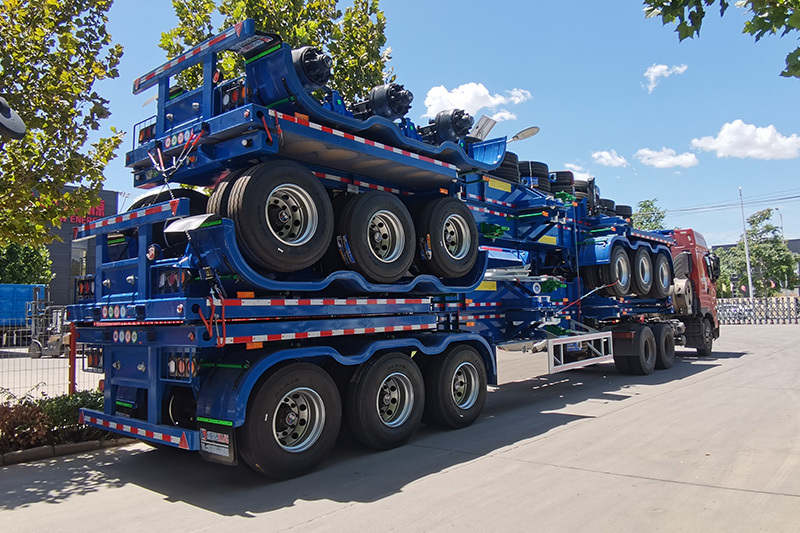
Skeletal semi trailers are characterized by their open-frame design, which consists of a skeletal structure that supports intermodal containers. Typically made from high-strength steel, the frame is designed to be both lightweight and durable. This design allows for easy loading and unloading of containers, as there are no walls or ceilings obstructing access.
The skeletal frame usually includes two or more axles, which provide stability and support during transport. The placement of the axles is crucial, as it affects the weight distribution and maneuverability of the trailer. Additionally, skeletal semi trailers often come with twist locks or other securing mechanis ms that hold the containers in place during transit, ensuring that they remain stable and secure.
Functionality
The primary function of a skeletal semi trailer is to transport intermodal containers, which are standardized shipping containers used for freight transport. These containers can be easily transferred between different modes of transportation, such as ships, trains, and trucks, without the need for unloading the cargo.
Skeletal semi trailers are particularly advantageous for transporting containers over long distances. Their lightweight design allows for higher payload capacities, which means that more goods can be transported in a single trip. This efficiency is critical for businesses looking to reduce transportation costs and improve overall logistics.
Moreover, the open design of skeletal semi trailers allows for quick loading and unloading processes. This is especially beneficial in busy shipping ports or distribution centers where time is of the essence. The ability to swiftly transfer containers from one mode of transport to another helps streamline operations and minimizes delays.
Advantages of Skeletal Semi Trailers
One of the most significant advantages of skeletal semi trailers is their weight efficiency. Because they are designed to be lightweight, they can carry larger payloads compared to traditional trailers. This is particularly important in the freight industry, where weight limits are strictly enforced. By maximizing payload capacity, businesses can reduce the number of trips required, leading to lower fuel consumption and decreased emissions.
Another advantage is their versatility. Skeletal semi trailers can accommodate various container sizes, making them suitable for different types of cargo. Whether it’s a standard 20-foot container or a larger 40-foot container, skeletal semi trailers can be easily adjusted to fit the specific needs of the shipment. This adaptability makes them a preferred choice for logistics companies that handle a diverse range of products.
Additionally, skeletal semi trailers require less maintenance compared to traditional enclosed trailers. Their open-frame design means fewer components are susceptible to wear and tear, leading to lower maintenance costs over time. This is a significant benefit for companies looking to optimize their operational expenses.
Applications
Skeletal semi trailers are used across various industries, including shipping, logistics, and construction. In the shipping industry, they play a crucial role in the intermodal transport of goods. Shipping companies rely on skeletal semi trailers to move containers from ports to distribution centers or warehouses efficiently.
In the logistics sector, these trailers are essential for companies that require quick turnaround times. The ability to load and unload containers rapidly makes skeletal semi trailers ideal for just-in-time delivery systems, where timing is critical to maintaining supply chain efficiency.
Furthermore, skeletal semi trailers are also utilized in the construction industry for transporting equipment and materials. Their ability to carry heavy loads while remaining lightweight makes them suitable for transporting large construction materials, such as steel beams or prefabricated components.
Conclusion
Skeletal semi trailers are a vital component of the modern transportation and logistics landscape. Their lightweight design, versatility, and efficiency make them an ideal choice for transporting intermodal containers and various types of cargo. As the demand for efficient and sustainable transportation solutions continues to grow, skeletal semi trailers will undoub tedly play a significant role in shaping the future of freight transport.
By understanding the design, functionality, advantages, and applications of skeletal semi trailers, businesses can make informed decisions about their logistics strategies. As the industry evolves, these trailers will remain a cornerstone of efficient cargo transportation, helping to meet the demands of a rapidly changing global economy.

Get A Free Product Quote
Fill in your phone and email information, we will contact you within one working day and solve your problem as soon as possible.
Shenghang Special Purpose Vehicle
Toll Free Hotline:400-059-0596
Tel:0086-311-85426885
Whatsapp:8618830151313(Sophia)